


Poor posture is often less about a single “bad” position and more about spending many hours in the same position. Sitting at a desk, looking down at a phone, driving, gardening, lifting household items, or relaxing on a couch can gradually reduce upper-back movement and make the neck and shoulders work harder.
A practical home routine can help improve body awareness, strengthen the muscles that support the spine, and make upright positions feel more comfortable. The exercises below require little equipment and can be adjusted for different fitness levels.
What does good posture actually look like?
Good posture is not a rigid military stance. It means the head, rib cage, pelvis, and feet are arranged so the body can move and breathe without unnecessary strain.
A comfortable standing position usually includes:
- Feet about hip-width apart
- Knees relaxed rather than locked
- Pelvis in a neutral, balanced position
- Ribs resting over the pelvis instead of flaring forward
- Shoulders relaxed, with the shoulder blades gently supported
- Head positioned over the shoulders rather than reaching forward
No posture is meant to be held continuously. Even a well-aligned position can become uncomfortable if maintained for too long. Changing position regularly is part of healthy posture.
Which exercises help strengthen the upper back?
The upper-back muscles help support the shoulder blades and counter the rounded position that can develop during prolonged sitting or screen use. These exercises should feel controlled rather than forceful.
Wall angels
Stand with the back near a wall, keeping the feet several inches away if needed. Gently draw the chin back, allowing the back of the head to move toward the wall without tipping the face upward.
Place the arms against the wall in a “goalpost” position if comfortable. Slowly slide the arms upward, then return them to the starting position.
- Perform 6 to 10 repetitions
- Keep the ribs from flaring forward
- Move only through a comfortable range
- Do not force the hands or elbows to remain against the wall
If the shoulders feel pinched, move the arms slightly forward from the wall.
Shoulder-blade squeezes
Sit or stand with the arms relaxed. Gently draw the shoulder blades back and slightly downward, as if placing them into the back pockets of a pair of pants. Hold for three to five seconds, then relax fully.
- Repeat 8 to 12 times
- Keep the shoulders away from the ears
- Avoid arching the lower back
- Think “broad across the collarbones,” not “squeeze as hard as possible”
This exercise is useful during a work break or after time spent reading, driving, or using a handheld device.
What exercises improve neck and head alignment?
A forward head position can increase the workload on the muscles at the base of the skull, neck, and upper back. Gentle neck exercises can improve awareness without forcing the head into an exaggerated position.
Chin tucks
Sit or stand tall. Look straight ahead and gently draw the head backward, as though making a subtle “double chin.” Do not look down.
Hold for three to five seconds, then release.
- Perform 8 to 10 repetitions
- Keep the jaw relaxed
- Avoid pushing the head forcefully into a headrest or wall
- Stop if the movement causes dizziness, tingling, or sharp pain
The movement should be small. A strong neck stretch is not required.
Gentle neck rotation
Turn the head slowly to the right until a mild stretch is felt, return to center, and repeat on the left. Keep the shoulders facing forward.
- Perform 5 repetitions per side
- Move slowly and breathe normally
- Stay within a comfortable range
- Avoid quick, repeated movements
This can be especially helpful after looking down for extended periods, but it should not be used to push through significant neck pain.
How can the chest and shoulders be stretched safely?
Tightness across the chest can pull the shoulders forward, particularly after long periods of sitting. A gentle chest stretch may make it easier to keep the shoulders in a relaxed position.
Doorway chest stretch
Stand in a doorway with one forearm resting against the frame. Place the elbow slightly below shoulder height. Step forward until a gentle stretch is felt across the chest and front of the shoulder.
Hold for 20 to 30 seconds, then switch sides. Repeat one or two times.
Keep the stretch mild. Avoid leaning so far forward that the shoulder moves sharply behind the body. Anyone with a recent shoulder injury, surgery, or unstable shoulder should use extra caution.
Open-book rotation
Lie on one side with the knees bent and arms extended in front of the chest. Keeping the knees together, slowly rotate the top arm and upper back toward the opposite side. Follow the hand with the eyes if comfortable, then return to the starting position.
Perform 5 to 8 repetitions per side.
This exercise encourages movement through the upper back rather than asking the neck or lower back to do all the work.
Which core and hip exercises support upright posture?
Posture depends on more than the neck and shoulders. The abdominal, hip, and lower-back muscles help stabilize the pelvis and trunk during standing, walking, and household activities.
Bridge
Lie on the back with knees bent and feet flat on the floor. Tighten the abdominal muscles gently and lift the hips until the shoulders, hips, and knees form a comfortable diagonal line.
Pause briefly, then lower with control.
- Perform 8 to 12 repetitions
- Keep the knees pointing forward
- Avoid arching the lower back
- Use a smaller lift if the full movement causes discomfort
Bridges can help strengthen the muscles used for standing, stair climbing, and getting up from a chair.
Bird dog
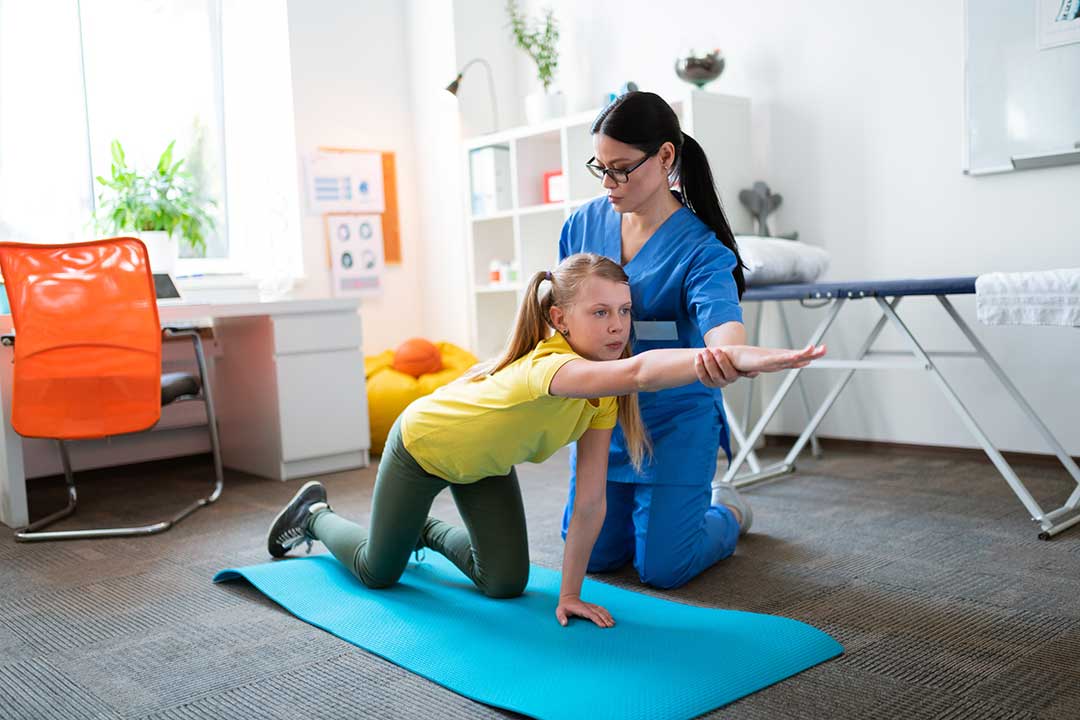
Begin on the hands and knees with the wrists below the shoulders and knees below the hips. Brace the abdomen lightly. Slowly extend one leg behind the body. If balance allows, extend the opposite arm forward at the same time.
Hold for two to five seconds, then return to the starting position and switch sides.
- Perform 5 to 8 repetitions per side
- Keep the hips level
- Avoid lifting the leg higher than the back
- Reduce the movement if the lower back begins to sag
A shorter reach is still useful. Control matters more than height.
How often should these exercises be done?
A brief routine performed consistently is generally more practical than an occasional long workout. Many adults can begin with 10 to 15 minutes, three to five days per week, while also changing positions throughout the day.
For people who spend time outdoors in warm, humid conditions, the routine may feel more comfortable indoors or during a cooler part of the day. Hydration, breathable clothing, and a stable exercise surface can help reduce unnecessary fatigue.
During desk work or household tasks, try changing position every 30 to 60 minutes. Standing briefly, walking around the home, or performing a few shoulder-blade squeezes may be more helpful than trying to hold perfect posture for hours.
When should an exercise be stopped?
Posture exercises may create mild muscle effort or a gentle stretch, but they should not cause sharp pain, increasing numbness, new weakness, loss of balance, or persistent joint pain.
Stop the movement and seek medical guidance if symptoms include:
- Pain traveling into an arm or leg
- Numbness or tingling that worsens
- New muscle weakness
- Dizziness, faintness, or unusual shortness of breath
- Severe pain after a fall or other injury
- Symptoms that continue to worsen despite reducing activity
People recovering from surgery or managing a known spinal, shoulder, neurological, or balance condition may need individualized instructions. The safest routine is one that matches current ability and can be performed with steady breathing and controlled movement.